Reggaeton
Kurs

Log in
100,00 € – 115,00 €
incl. VAT
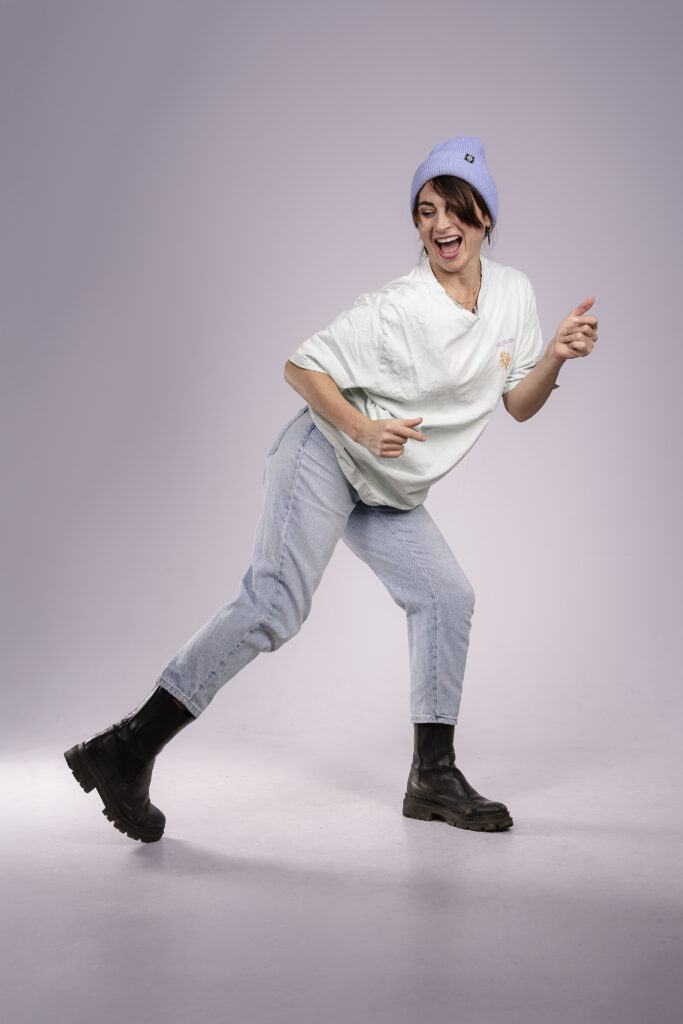
Reggaeton dance is an energetic, sensual style that developed alongside the music genre of the same name. Originating in Puerto Rico, Reggaeton combines various influences like Hip-Hop, Dancehall, Latin, and Afro-Caribbean rhythms. The dance is closely tied to the pulsating beat and the distinctive Dembow rhythm, which forms the core of the music.
🕺Tanzstil
Body-focused & rhythmic: The dance heavily emphasizes movements of the hips, pelvis, and upper body. Movements are often fluid, sexy, and confident.
Isolation Movements: Dancers isolate specific body parts (e.g., chest, hips) to emphasize the beat.
Freestyle & Expression: There are no fixed step sequences – many movements arise spontaneously. Personal style and musical interpretation are paramount.
Attitude: Reggaeton is danced with a lot of charisma – confidence, coolness, and a bit of a “Bad-Boy/Boss-Lady” vibe are all part of it.
Partner or Solo Dance: Reggaeton can be danced alone, with a partner, or in groups. Partner dance versions often include flirty, playful elements.
💃 Typische Bewegungen
Perreo: The most famous Reggaeton move – a deep, sexy hip movement in a squatting position, often danced with your back to your partner.
Booty Shakes / Hip Rolls: Fast or circular hip movements to emphasize the beat.
Shoulder Rolls / Chest Pops: Accented upper body movements for style and musicality.
Low Drops / Ground Moves: Dancers often go deep into a squat, which gives the dance more power and dynamism.
———————
Afro Cuban Bodymovement
“Afro-Cuban Bodymovement” describes a powerful and rhythmic way of moving the body, deeply rooted in Afro-Cuban dances and spiritual traditions – particularly in the dances of the Orishas (deities from the Yoruba religion) and in styles like Rumba, Guaguancó, Columbia, or Yoruba dances. These movements are a central component of many Cuban dance forms such as Salsa, Timba, and Afro-Cuban Jazz.
📍 Herkunft
Although Salsa has its roots in Cuba (e.g., in Son Cubano), it was primarily developed and popularized by immigrants in New York in the 1970s.
✨ Core Characteristics of Afro-Cuban Bodymovement
Isolations and Body Control:
Intensive use of the chest, shoulders, hips, and spine.
Movements often flow in waves through the body – e.g., “undulations” or “rolls.”
Polycentric & Polyrhythmic:
Different body parts often move independently but in harmony with various rhythms.
The body dances multiple rhythms simultaneously – one arm follows the conga rhythm, while the pelvis follows the bass.
Grounded Movement:
The body remains deeply anchored to the ground, with bent knees and a strong connection to the earth.
Movements are heavy, earthy, almost ritualistic – not “light” or “airy.”
Spiritual and Cultural Expression:
Many movements are inspired by the dances of the Orishas (e.g., Shango, Yemaya, Eleggua), which embody elements like water, fire, or wind.
Expressive gestures, facial expressions, and energy are central.
Coordination & Sense of Rhythm:
Afro-Cuban Bodymovement requires a fine sense of complex rhythms and quick responsiveness in the body.
🎶 Beispielhafte Bewegungen
Shoulder rolls (Desplazamientos de hombros)
Chest waves (Ondas de pecho)
Hip circles (Círculos de cadera)
Torso isolations
Fluid arm movements (often with symbolic meaning)
Latin Jazz Dance is a passionate, energetic dance style that combines elements from Latin American dances and Jazz Dance. It unites rhythmic diversity, strong body control, expressiveness, and improvisation – just like the music it is danced to.